


You Can’t Do Real Pool Leak Detection From the Pool Deck
If you own a swimming pool in Massachusetts, New Hampshire, or Maine and your pool is losing water, there’s a good chance someone has already told you the problem is “probably underground plumbing.”
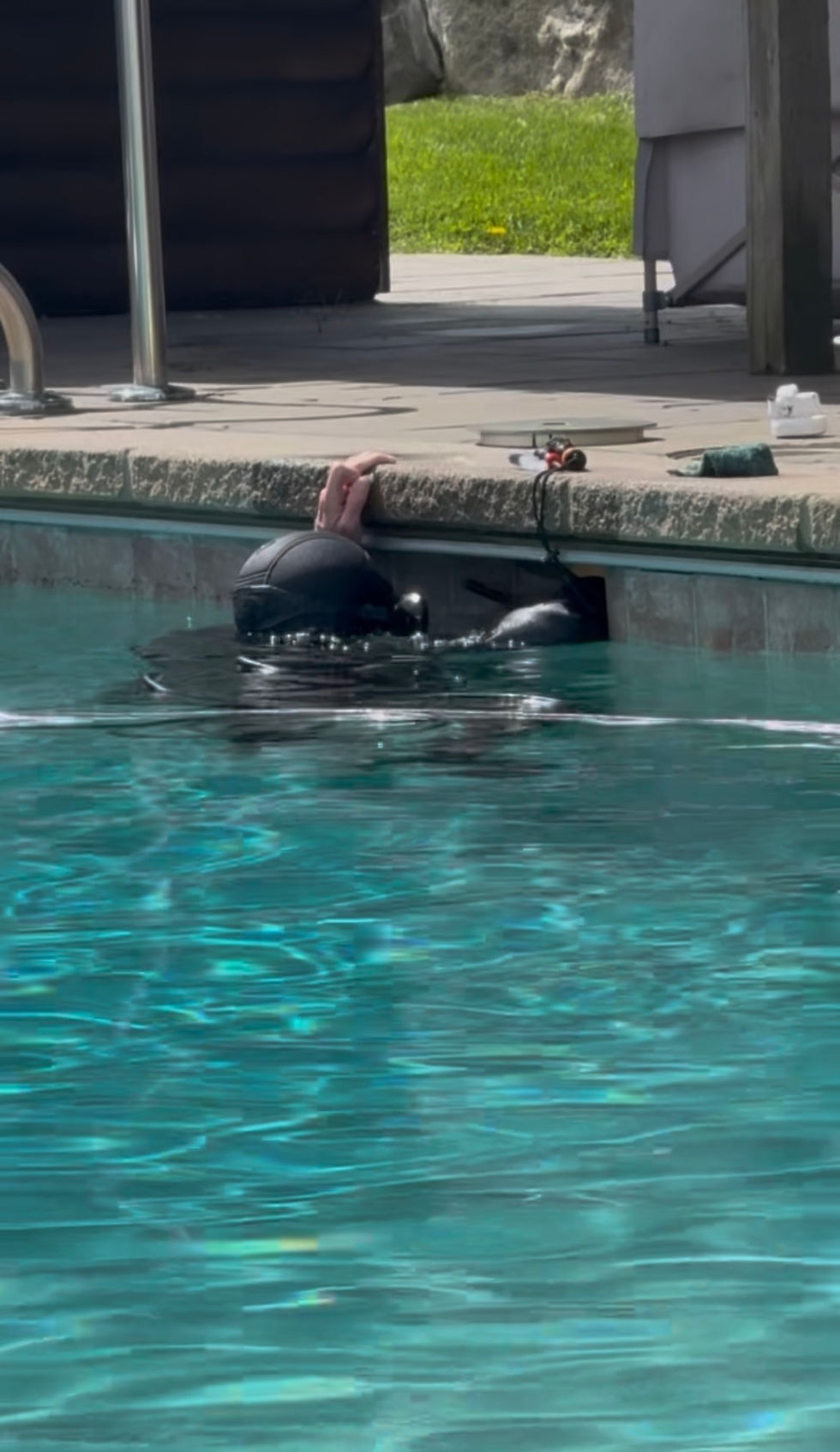
The reality is that most swimming pool leaks are not found by standing on the pool deck or simply pressure testing pipes. Real pool leak detection requires a full underwater inspection inside the pool itself.
At Seacoast Water Services, we get in the water on every inspection no matter the water temperature. That’s because many leaks can only be identified underwater through direct inspection, dye testing, listening equipment, and hands-on evaluation.
Why Pool Deck Leak Detection Often Misses Leaks
One of the biggest misconceptions in the pool industry is that every leak is a broken underground pipe.
After performing hundreds of leak inspections across New England, our inspection data consistently shows that underground plumbing leaks are only a portion of the leaks we find. Many leaks are actually located inside the pool structure itself.
Common leak locations include:
Lights and light conduits
Skimmer throat cracks
Return fittings
Skimmer Sumps
Main drains
Vinyl liner tears
Tile line cracks
Bond beam cracks
Separation around fittings
Hydrostatic Valves
Underwater structural cracks
Most of these issues cannot be properly evaluated from the pool deck.
Why Getting in the Pool Matters
Underwater inspections provide a completely different perspective than visual checks from outside the pool.
Once underwater, leak specialists can:
Inspect fittings, lights, and all other apparatus at eye level, up close
Use dye testing precisely at suspected leak points
Identify failed previous repairs
Determine whether a repair can be completed immediately
In many cases, getting underwater reveals multiple issues that would never be visible from above.
Pressure Testing Alone Is Not Leak Detection
Pressure testing can be a useful tool in certain situations, but pressure testing alone is not comprehensive leak detection.
A pressure test may confirm that a pipe has a problem, but it often does not tell you:
Where the leak is located
Whether the leak is actually underground
Whether multiple leaks exist
Whether the plumbing is even the main source of water loss
This is why many pool owners end up paying for unnecessary excavation or entire pipe replacements before a proper leak inspection is performed.
Cold Water Is Not an Excuse
In New England, many pools open in very cold conditions during the spring. Some companies avoid getting in the water altogether during these periods.
The problem is simple: leaks do not stop because the water is cold.
If the inspection is incomplete, leaks can easily be missed. That often leads to repeat visits, wasted money, ongoing water loss, and unnecessary frustration for homeowners.
Professional pool leak detection sometimes means getting in 45-degree water because that’s what the job requires.
Signs You May Have a Swimming Pool Leak
Common signs include:
Losing more than 1/4 inch of water per day
Air entering the system
Cracks near skimmers or tile lines
Wet spots in the yard
Water loss that increases when the system runs
Constant need to add water, more than 1 time per week
If you are experiencing any of these issues, a full underwater leak inspection is usually the best starting point.
Pool Leak Detection in Massachusetts, New Hampshire, and Maine
Seacoast Water Services specializes in professional swimming pool leak detection and underwater repairs throughout New England.
Our inspections combine:
Underwater leak inspection
Dye testing
Electronic liner scanning
Acoustic leak detection
Underground leak locating
Camera inspections
Same-day underwater repairs when possible
Because at the end of the day, you can’t do real leak detection from the pool deck.


Comments